


AI is changing how software gets built. AI can now handle many coding tasks much faster, opening up new possibilities for how teams work and what they can deliver. But writing code and engineering software aren't quite the same thing.
Behind every working application are decisions about architecture, integration, testing and maintenance. And as AI takes on more of the implementation work, those decisions don't disappear.
Tech
AI writes the code. But engineering is more than coding.
.png)
Bobbi opens a new route to support in South Yorkshire
.png)
Bobbi has officially arrived in South Yorkshire. This October, South Yorkshire Police launched Bobbi, a new 24/7 agentic solution designed to help around 1.4 million people access policing information and support online. Infomentum has been proud to work alongside the force to deploy Bobbi and bring the new service to life, marking an exciting milestone for everyone involved.
Tech
Three days at Dreamforce: Here’s what I'm still thinking about
.png)
I’ve wanted to go to Dreamforce for a decade. Salesforce Marketing wasn’t exaggerating - it was unforgetable (as was the Cabernet Sauvignon). Without sounding as middle aged as I am, I literally felt like I was living in the future.
Driverless cars dropping us off at dinners. Robots walking through the conference. An agentic business development representative more efficient and competent than I’ve seen in more than a decade of sales experience. Then there’s Dreamforce itself. Tens of thousands of people across the campground. 1,600 sessions to choose from. Gwen Stefani opening the keynote. And then Dreamfest.
So yes, there was a lot going on and I’ve finally gotten round to my wrap up!
Tech
New Anypoint Code Builder features: Spring/Summer 2026
.png)
Welcome to the 11th (yes, 11th!) part of my blog series on MuleSoft's Anypoint Code Builder.
A lot has changed since I first started exploring the development environment. With every release, Anypoint Code Builder has become more capable and easier to navigate, helping developers spend less time searching through tricky projects and more time building, testing and improving integrations.
Tech
Police reform: why technology has to be part of the conversation
.png)
A once-in-a-generation opportunity for policing - but reform has to be about more than structures.
Today HMICFRS published its State of Policing 2025–26 report, describing police reform as a once-in-a-generation opportunity to improve the service provided to the public, and it’s difficult to argue with much of the sentiment.
Tech
From ITSM to ESM: Taking Service Management Beyond IT
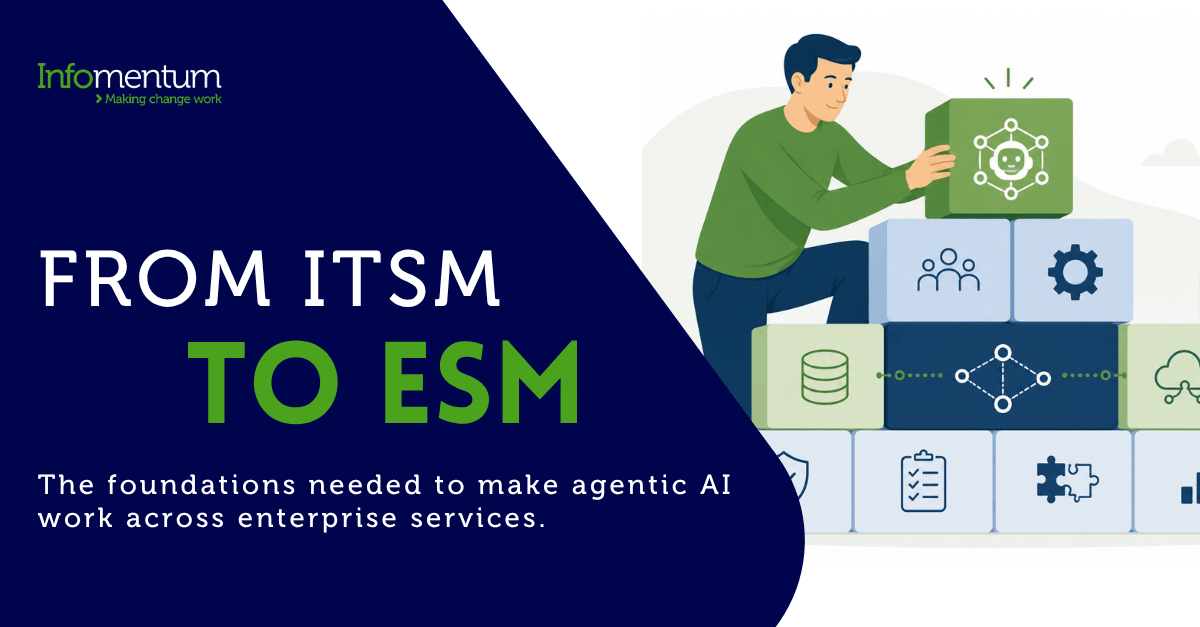
Having recently wrapped up an IT service management (ITSM) implementation for a large police force built on Agentforce IT Service, I’ve been thinking about what comes next. Not just for the force, but for organisations in general. ITSM has traditionally focused on making it easier for IT teams to manage requests, resolve issues and keep services running. But the need for simple, well-managed services doesn’t stop at the IT desk.
Tech
Accessible by design: Building better public services for everyone
.png)
When we talk about digital accessibility, the conversation often begins and ends with websites: screen-reader compatibility, keyboard navigation, colour contrast and alternative text.
These things are essential, but in the public sector, accessibility must go much further.
Tech
Why citizen journeys matter more than organisational boundaries
.png)
For most of my career, I've worked in and around public services, particularly policing, but also alongside a wide range of partner agencies responsible for supporting citizens through complex and often challenging journeys. Although the services themselves are very different, the questions citizens ask are remarkably consistent:"What's happening?" "What happens next?" "Do I need to do anything?" "Who can help me?"
Today, citizens expect answers to those questions quickly, clearly and through the channels they prefer to use. They increasingly compare their experience of public services not with other public services, but with the best digital experiences they encounter elsewhere in their daily lives. Yet many public sector organisations still struggle to provide timely, proactive communication throughout a citizen's journey.
Tech
Five AI agents every business should know about
.png)
Artificial intelligence (AI) has spent the last few years making promises. Now, with the emergence of agent-based AI, it's starting to deliver them.
For most organisations, AI adoption has followed a similar pattern: a chatbot here, an automation there, maybe a co-pilot bolted onto an existing tool. Useful, but also somewhat limited. These are instruments that respond when prompted. What they don't do is take initiative, hold context, or carry a task through from start to finish.
That changes with AI agents.
Tech
Why asset management matters for autonomous AI
.png)
When people talk about the future of IT Service Management, the conversation almost always revolves around AI.
AI agents. Automated resolutions. Predictive insights.
But there is a less glamorous topic that deserves just as much attention: Asset Management. After all, an AI agent can't fulfil a hardware request, recommend sourcing options, or automate lifecycle processes if it doesn't know what assets exist, where they are, or whether they're available.
In my experience working with public sector organisations, one of the biggest challenges isn't a lack of technology - it's a lack of visibility.